This post has been a long time in the making with a lot of research to get it just right. The project started around the release of The Next Day. Time and life got away from me, and my next chance for an appropriate time was when Nothing Has Changed came out. Again, life got in the way of me completing the project and I had hoped Blackstar would provide the spur to get it finished. After what happened two days later, there was no way I was going to look like I was capitalising on that news.
It did give me more time to listen to and compare all the collections though so now, more than three years after the idea, on his 70th birthday, here is my guide to one of the most compiled artists ever…
CHANGESONEBOWIE - 1976

This could seriously rank as one of the best Best-of albums ever. Although by now it features only a brief period of his career, it still stands as an excellent introduction to Bowie and great standalone album in its own right. It features the first album release of John, I’m Only Dancing.
The 40th Anniversary remaster shows a fair but not unreasonable amount of volume maximisation. Still one of the greatest album covers ever.
For: The original*, iconic cover, first album release of John, I’m Only Dancing
Against: Short, covers only a fraction of Bowie’s career.
 |
| Changes from CHANGESONEBOWIE, initial CD release |
 |
| Changes from CHANGESONEBOWIE 40th anniversary edition |
CHANGESTWOBOWIE - 1981

Bowie had delivered his final album to RCA the year before and was waiting for his contract with his ex-manager to expire when they released this sequel. Aesthetically, it matches ChangesOne in a tasteful way. The track selection is altogether more curious.
Although there had been plenty of changes to document since 1976, six out of the ten tracks date from before ChangesOne was released. They’re all worthy selections but these days it beggars belief that there could be a Bowie compilation that covers the 70s and doesn’t include ‘Heroes.’ The biggest attraction was that this was the first album release of John, I’m Only Dancing (Again). The versions of DJ, Fashion, and Ashes to Ashes are the single edits.
This album has never been included in any of the subsequent reissue campaigns. As such, it has never been remastered, so if you’re interested in the original 1970s masters, this collection is worth tracking down.
For: First album release of John, I’m Only Dancing (Again), unremastered
Against: Hard to find, virtually ignores the Berlin period.
Sidebar 1
REMASTERING: What even is it?Mastering is the process of preparing the final mix of a recording for release by adjusting equalisation and volume for the best possible playback. Of course, best possible playback is an extremely subjective description because mastering is an extremely subjective process.When it comes to remastering, it ain’t what you do but the way that you do it.If an album has been remastered, it doesn’t mean they did a substandard job the first time around (although sometimes it does). As the decades drag on, there will always be technology that can make a recording that was mastered as best as they could at the time sound even better. Whether it does or doesn’t will always be a matter of taste but there are a few things to be aware of.Firstly, don’t be fooled when you hear a record has been digitally remastered. If it’s being released in any kind of digital format including CD, then by definition, it’s been digitally mastered.Other variables include the source used for remastering. Is it the original multitracks, the original stereo mix, or something further down the chain? If the original source is digital, what resolution is it? Who is doing the remastering – someone connected with or sympathetic to the artist, or record company staff engineers?The most controversial aspect of remastering is what has become known as the loudness war, best illustrated by this video:
Digital formats allow artificial evening out of the volume of a song which would be physically impossible on a format like vinyl, which is ultimately an acoustic form of reproduction. This is why some people insist that LPs have a more natural sound than digital formats. It’s not that CDs can’t sound the same as LPs, it’s just that they are often mastered differently.Another name for this volume maximisation is ‘brickwalling’ for the way it makes the waveform look. Making every part of a sound as loud as every other part might make it cut through on the radio or in a crowded bar, but it can also contribute to listener fatigue and possibly hearing damage with prolonged exposure at excessive volume. Still, some people prefer it that way, and that’s okay if you’re into that kind of thing.The upshot is that saying an album has been remastered doesn’t necessary mean it’s going to sound better, or worse, or noticeably different at all. If in doubt, believe your ears.
CHANGESBOWIE - 1990

Ten years, and at least three different Bowie images on, and the time was right for CHANGESTHREEBOWIE. But that would have been obvious, wouldn’t it?
ChangesBowie essentially an update patch for the original to include the early 80s hits (although nothing post-1984) and ‘Heroes’, plus a new remix of Fame. The track-listing is loosely chronological.
To illustrate the changes over the years, they took the original cover and randomly slapped details of other album covers over it so it ends up looking like your year 9 school folder.
Fame 90 is a rather forgettable remix and very n-n-n-nineties. Some reissues have replaced it with the original version. The double vinyl version of the album also includes Starman, Life on Mars? and Sound and Vision.
For: Only album release of Fame 90.
Against: Terrible cover.
 |
| Changes from CHANGESBOWIE |
The Singles Collection - 1993

Being true to its title means The Singles Collection gets to avoid any disagreements over whether any of the selections count as either hits or Bowie’s best. Therefore, tracks such as Sorrow, Drive-In Saturday, TVC15 and Beauty and the Beast make their compilation debuts here.
It’s not a complete collection. The single version of The Prettiest Star is not included and several 80s and early 90s singles are ignored. However, it is the first album to include Alabama Song and Dancing in the Street, as well as being the first Bowie album to include Under Pressure, This is Not America, and Absolute Beginners.
The track sequencing is mostly chronological according to single release, which is why Life on Mars? pops up between Drive-In Saturday and Sorrow, while Wild Is the Wind comes after Under Pressure due to it being released as a single to support CHANGESTWOBOWIE. Of all the collections, this one features the full version of Ashes to Ashes rather than the single edit.
The US version of the album has a slightly different tracklisting to reflect the US singles. Notable additions include Oh! You Pretty Things, Be My Wife, Cat People (Putting Out Fire), Loving the Alien and the underrated Jump They Say.
For: Includes several non-album singles.
Against: Doesn’t include all non-album singles.
 |
| Changes from The Singles Collection |
The Best of David Bowie 1969/1974 - 1997

It makes sense to divide Bowie’s career into certain phases for compiling and this first volume in a series does a pretty good job of showcasing what could arguably be called the Mick Ronson/Spiders from Mars years.
Having a full CD for the early 70s period allows them to add less obvious but high quality selections such as Aladdin Sane and The Man Who Sold the World, the latter having been introduced to the 90s generation by Nirvana’s cover.
For long-term fans who already have the obvious selections, there’s the rare saxophone version of John, I’m Only Dancing, the original single version of The Prettiest Star featuring Marc Bolan on guitar, the rare B-side Velvet Goldmine (which had recently become the title song of a movie), and Bowie’s own, unreleased version of All the Young Dudes.
The tracks are sequenced in the interests of album flow, and it’s the only compilation to include Suffragette City but not have it following Ziggy Stardust. The album seems very loosely divided between a rock half and a more mellow half.
For: Several non-album and rare tracks.
Against: Only covers part of Bowie’s career, obvs.
 |
| Changes from The Platinum Collection/The Best of David Bowie 1969/1974 |
The Best of David Bowie 1974/1979 - 1998

The second volume follows Bowie from Philly to Berlin yet despite this being one of his most creative periods, there’s something vaguely unsatisfying about this representation of it.
John, I’m Only Dancing (Again) is included, making it the easiest way to get the song today, plus a cover of Springsteen’s It’s Hard to Be a Saint in the City, previously only available on Sound + Vision.
It does feel like there’s a bit of padding on this collection to fill out the CD. Knock On Wood, already included on The Singles Collection, could easily have been traded out for something from the Stage album, and it would have been nice to have one of the more accessible Berlin instrumentals like V2 Schneider or A New Career in a New Town.
For: Easiest way to get John, I’m Only Dancing (Again)
Against: Seems a bit padded.
The Best of David Bowie 1980/1987 - 2007

There are those, including many hardcore Bowie fans, who will argue that he didn’t do anything decent after Scary Monsters. This is of course a load of twaddle and those people need to get the batteries in their hearing aids replaced. Having said that, is it fair to say that Bowie had quality control issues during the 80s.
The best thing about this collection is that it includes all of Bowie’s film songs from the 80s including Cat People (Putting Out Fire), This is Not America, When the Wind Blows, Absolute Beginners and Underground. It also includes Alabama Song and The Drowned Girl, the latter previously only available on the Baal EP.
Thematically, the album hangs together remarkably well with Loving the Alien following on from This Is Not America for example.
The initial release of 1980/1987 included a DVD of video clips of the songs.
For: Good rehabilitation of Bowie’s 80s work, features all the film songs.
Against: Has no follow-up
The Platinum Collection - 2005

Well-priced 3-disc collection of the above. Possibly the best introduction to Bowie.
Sidebar 2
The missing pieceUntil Nothing Has Changed, every Bowie compilation sold his career short in one way or another, but mostly by giving the impression that it ended in 1987. Even Best of Bowie makes only a token reference to his 90s output.The Platinum Collection would be made complete if it added a fourth disc with a tracklist that went something like this:
Image by Harry W 1 – Under the God; 2 – Fame 90; 3 – Goodbye Mr. Ed; 4 – Real Cool World; 5 – Jump They Say (Rock Mix); 6 – Black Tie White Noise; 7 – The Buddha of Suburbia; 8 – The Heart’s Filthy Lesson; 9 – Hallo Spaceboy (PSB version); 10 – Little Wonder; 11 – Dead Man Walking; 12 – I’m Afraid of Americans; 13 – Thursday’s Child; 14 – Seven; 15 – Survive; 16 – Slow Burn; 17 – Everyone Says ‘Hi’; 18 – New Killer Star; 19 – Rebel Never Gets Old(The Next Day and ★ deserve to stand alone)

Best of Bowie - 2002

Released between 1974/1979 and 1980/1987, this 2-disc collection is notable for being the first to not ignore everything Bowie had done in the previous 15 years.
For reasons unknown the track listing is slightly different in every region it was released in. In general though, it’s a good, career-spanning collection that includes the best-known non-album singles, including the Pet Shop Boys version of Hallo Spaceboy.
While decent in its day, better compilations have been released since.
There was also a single-disc version released that contains only the radio songs and only acknowledges any post-1985 work in the form of Slow Burn, the most recent single at the time
The double DVD of the same title is the best Bowie video collection ever released.
For: Career-spanning in its day
Against: Made somewhat redundant by what came after
 |
| Changes from Best of Bowie |
Sound+Vision - 1989/2003

Originally released as a luxury box set at the beginning of a reissues campaign when Bowie regained control of his back-catalogue, this collection was reissued in an expanded but more compact and affordable form in 2003, which is the version this review looks at.
It’s a great set for collectors since it includes many rarities (some of which have become less rare with subsequent releases) including the demo of Space Oddity, the cover of Chuck Berry’s Round and Round, London Bye Ta-Ta, the US single mix of Rebel Rebel, Helden (German version of ‘Heroes’) and the full version of Cat People (Putting Out Fire) among many others.
However, these treats are interspersed with the regular album or single versions of tracks that any collector would already have. As such, it’s a bit of a mish-mash, but well worth the current purchase price.
For: Many rarities, only compilation to include Tin Machine
Against: Padded out with tracks easily available elsewhere
 |
| Changes from Sound+Vision |
iSelect - 2008

Originally compiled for a giveaway with a British Sunday newspaper, a combination of popular demand and Bowie’s fondness for the set led to a commercial release.
Chosen by Bowie himself, it’s a collection of personal favourites selected without regard for popularity. It’s currently the easiest way to get the Low era outtake Some Are, and was the first release of the MM remix of Time Will Crawl.
For: Bowie’s own personal best
Against: Light on hits and singles.
Nothing Has Changed. 3-disc edition - 2014

The 3-disc version deserves a separate review because it’s effectively a completely different album to the shorter options.
Firstly, regardless anything you read (including the remainder of this post), this is the only truly career-spanning Bowie compilation ever released. Anything that doesn’t go back any further than Space Oddity is ignoring the first five years of his career.
This one goes all the way back to Liza Jane, released in 1964 as Davie Jones and the King Bees. What’s more, it does it Benjamin Button style in reverse chronological order.
There’s plenty here to attract long-term fans. In addition to the original version of Sue (or In a Season of Crime), it includes the first official release of three tracks from the shelved Toy album, the MM remix of Time Will Crawl, subtle remixes of Wild is the Wind and Young Americans, and the aforementioned early tracks. While it’s often cheeky and presumptuous to include previously unreleased material on a best-of album, they all fit and flow perfectly.
With its mysterious title and (spoiler alert) answer in the inner artwork that ‘Everything has changed,’ this is easily the most complete, most artful, most BOWIE collection of them all. The only slight shortcoming is that the reverse track order could prove a bit challenging for the Bowie novice.
For: Truly career-spanning, plenty of rare tracks.
Against: Slightly eccentric track order (mind you, if slightly eccentric isn’t your thing, why are you even interested in David Bowie?)
 |
| Changes from Nothing Has Changed. |
Nothing Has Changed. 1 & 2 disc editions - 2014

The 2-disc version of Nothing Has Changed follows a much more conventional path. The first disc is extremely similar to Best Of Bowie, dropping Suffragette City in favour of Moonage Daydream and also adding the previously unreleased stereo version of All the Young Dudes.
Disc 2 brings in Thursday’s Child, Everyone Says ‘Hi,’ and New Killer Star as well as the ‘Hello Steve Reich’ mix of Love is Lost (previously only available on the bonus disc reissue of The Next Day) and Where Are We Now? In keeping with the (forwards) chronological order, Sue (or In a Season of Crime) concludes the album.
The single disc edition mixes things up again. Rather than just being a culled version of the 2-disc set, this one follows no chronological order and in fact starts off with some 80s hits before going back to the 70s and then mixing the eras at will.
This is the only album release of the radio edit of Sue (or In a Season of Crime). This is not the shorter, re-recorded version released on ★.
For: Career-spanning, stereo version of All the Young Dudes, original version of Sue (or In a Season of Crime)
Against: Not much, really.
Legacy - 2016

Really? Who decided this was necessary?
It may be fully career-spanning, but there has only been one album released since the previous career-spanning collection, so this really smacks of cashing in. Some of the promotional material talked up the fact that it includes the single versions of the tracks where they exist. As if every other compilation hasn’t included the single edits? Queen Bitch please! And the single edit of ‘Heroes’ has always been a travesty which ruins the drama of the song.
Also, the cover recalls some of the cheap and nasty compilations of the late 70s and early 80s (see below). In fairness though, the images inside the booklet are far better and more appropriate than the front cover.
As far as the track selections go, this is almost a carbon copy of the 2-disc version of Nothing Has Changed. Love is Lost and Sue (or In a Season of Crime) are dropped in favour of Slow Burn, the single edit of Lazarus and I Can’t Give Everything Away. While the latter two are both worthy inclusions, there isn’t a serious Bowie fan on Earth who doesn’t already have them on ★ and it does mean the collection ends on a bit of downer.
The tracks on disc 1 are identical to those on the first disc of the double version of Nothing Has Changed, except for the inclusion of a remix of Life on Mars? It is a beautiful mix, stripping out the drums and guitar leaving only the piano and orchestra, but again it seems like a cynical addition to make fans buy this largely redundant collection.
The single-disc version, like the single disc version of Nothing Has Changed, has a non-chronological track order but still includes the remix of Life on Mars? and the single edit of Lazarus, making it the choice for completists on a budget.
For: Career-spanning, lovely remix of Life on Mars?
Against: Basically a re-tread of Nothing Has Changed, rubbish cover.
If you had to choose one, choose…
Look, this is really hard. The 3-disc version of Nothing Has Changed is far and away the most complete collection but the reverse track order and inclusion of rarities may be off-putting to some newcomers. The Platinum Collection is an excellent, economical introduction but misses all the good work he did in the 90s and 00s.
If these mini box-sets seem a little too daunting, start with the 2-disc version of Nothing Has Changed. Or Legacy if you want. It’s much of a muchness really.
See also,
The World of David Bowie - 1970

* Well alright, this is arguably the ‘original’ Bowie compilation. As Bowie’s star continued to rise, Decca did their best to squeeze as much value as possible out of the relatively small amount of material he recorded for their Deram label. (see below)
If the oldest Bowie song you know is the widely released version of Space Oddity, then you’re in for a shock. Although most of these tracks were recorded in swinging London during the summer of love, the style they owe the most to is music hall.
While incomplete, this volume of Decca’s perennial ‘World of…’ series is notable because Bowie did choose the tracks. However, this shouldn’t be considered an endorsement since the album was going to be released with or without the artist’s input.
Images 1966–1967 - 1973

Double album collection or Deram recordings, including whole of his debut album, plus singles and B-sides. Reissued in 1976 with a Young Americans era cover photo.
Chameleon - 1979

Budget label collection which is interesting for its major focus on the Berlin period, including Breaking Glass, V2 Schneider and – praise be! – the full version of ‘Heroes.’
The Best of Bowie - 1980

Another budget label release. First collection brave enough to include Rock ’n’ Roll Suicide, as well as the live version of Breaking Glass and an edited version of Diamond Dogs.
Another Face - 1981

Decca recouping their investment in a slightly updated form. For a time, this was the best place to get The Laughing Gnome.
A Second Face - 1983

Follow-up to the above. More from the Deram years.
Golden Years - 1983

Curious exploitation collection focussing mainly on the mid-to-late 70s and for some reason, includes I Can’t Explain from Pinups rather than Sorrow.
Fame and Fashion - 1984

Yes, there are a lot of really obvious potential titles for Bowie compilations, aren’t there?
Yet another cheap exploitation collection, but gives a pretty decent overview of the 1969 to 1980 era.
The Deram Anthology - 1997

Currently the best place to get all the Deram tracks, including the whole of the debut album, singles and B-sides. Features the original version of Space Oddity, which is not the famous version everyone has heard.
Bowie at the Beeb - 2000
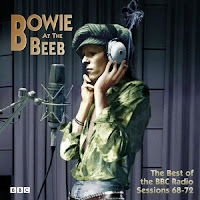
Collection of live-in-studio tracks recorded exclusively for the BBC. While clearly aimed at collectors and completists, it’s interesting for the fact that the recordings are owned by none of Bowie’s previous record companies.
This means it’s the first compilation that includes early songs like In the Heat of the Morning, Karma Man, and a rocked-up version of Let Me Sleep Beside You alongside Spiders-era songs such as Queen Bitch, Moonage Daydream and Ziggy Stardust.
All Saints - 2001

What started out as a mix-tape for friends in 1993 was rearranged as a collection of instrumental works for commercial release in 2001.
It draws mainly from Low and “Heroes” but also includes selections from The Buddha of Suburbia and a piece from Phillip Glass’s Low Symphony. The most accessible tracks are at the front of the record with the rest becoming an ambient chillout mix.
While it’s a good idea to collect Bowie’s instrumental work, stripped of the context of their native albums, it risks becoming too much of a reasonably interesting thing. Good, but approach with caution.
Club Bowie - 2003

Collection of rare and (previously) unreleased club mixes. China Girl and the Club Bolly version of Let’s Dance are half decent. The rest are fairly generic if not unrecognisable. Inessential unless you’re the most passionate completist or a DJ (and are what you play).
The Collection - 2005

Curious budget collection that includes one non-single track from every Bowie album between 1969 and 1980 with the exception of Pinups.
Worthwhile for anyone looking to explore beyond the hits but unsure where to start.
1966 - 2015

Decca wasn’t the only company Bowie was briefly signed to in the 60s that continued to wring the association dry.
1966 is just the latest iteration of the half-dozen tracks recorded for Pye. They have been released multiple times under various titles, covers and labels. No one version is any better than the other.
See also: I Dig Everything - the Pye singles; Don’t Be Fooled by the Name; Early Bowie, et al.
See also: I Dig Everything - the Pye singles; Don’t Be Fooled by the Name; Early Bowie, et al.
Lazarus - 2016

It’s perhaps a bit of a ring-in to include this in a list of Bowie compilations, but it is a collection of some of his best loved songs, old and new, re-recorded and arranged with Bowie’s imprimatur.
This original cast recording of Bowie’s musical is given extra poignancy because it was made on 11 January, 2016 – the day after Bowie died.
Some of the arrangements are faithful to the originals while others, including The Man Who Sold the World, Changes, and Absolute Beginners are quite different. There are only brief moments when the performances become a little bit too Broadway.
A second disc contains Bowie’s own versions of the previously unreleased tracks featured in the musical.
I’m happy, hope you’re happy too.


