Being a rock star is of course the coolest thing you can possibly be. But it doesn’t mean everything about you is cool. In fact, some of the biggest rock stars you know are nerds just below the surface.
Jimmy Page
Page started his career as a session guitarist and can be heard on dozens singles that would be deemed far too poppy and cheesy for any Zep aficionado. Led Zeppelin themselves dropped several references to The Lord of the Rings into their early songs and Page is such a fan of Aleistair Crowley he bought Crowley’s former home.
Nerd score: 7/10
Brian May
The Queen guitarist is a Doctor of Astrophysics, a passionate campaigner for animal rights – particularly badgers – and plays a guitar which he built himself as a teenager out of timber from the family fireplace. With a sixpence!
Nerd score: 12/10
Metallica
Their image is heavy but Metallica are music nerds at heart. Their rhythms are meticulously crafted and they will never play eight bars of 4/4 where a mix of 5/8, 3/4, 12/8 and 6/4 will suffice.
Nerd score: 8/10
Frank Zappa
Although the bulk of his lyrics were aimed at frat boys, Zappa’s music was all nerd. Auditions for his band bordered on the cruel. Applicants were required sight-read ridiculously complex parts and then improvise over bizarre time signatures like 11/8. Having learned from his father, Dweezil has said that 4/4 is the hardest rhythm for him to play.
When Zappa discovered he had a namesake in ’cellist and composer Francesco Zappa, Frank made an album of Francesco’s work by programming it into his Synclavier – an instrument he used for composing parts that were practically impossible for a human to play.
In the early 90s, Zappa had planned to set up a consulting business to facilitate trade between former Soviet Union states and the west. Czechoslovakian president Václav Havel had named him Special Ambassador to the West on Trade, Culture and Tourism but the appointment was nixed by then secretary of state James Baker.
Nerd Score: 10/10
John Lennon
The working class hero was never really working class. He was brought up by his middle-class aunt and went to art school. He published twovolumes of absurdist verse, prose and cartoons in his lifetime and another was posthumously published.
Having once described avant-garde as “French for bullshit,” he fell in love with conceptual artist Yoko Ono, and embraced her experimental style on the albums Two Virgins, Life with the Lions and Wedding Album.
Later, during his house-husband years, he would take Polaroid photos of the loaves of bread he baked and send them to friends.
Nerd score: 8/10
George Harrison
The Quiet One discovered Indian music almost by accident while filming the move Help! He took to it with a passion and studied the sitar under master Ravi Shankar. His interest in non-western instruments influenced almost all of late 60s music. He signed Radha Krishna Temple to Apple Records and inadvertently invented WOMAD.
He was a supporter of the Natural Law Party, a political offshoot of the Transcendental Meditation movement.
A lifelong Monty Python fan, he appeared as a reporter in Eric Idle’s spoof The Rutles, and financed Life Of Brian after big studios balked at the subject matter.
Nerd Score: 7/10
Jeff Baxter
The Steely Dan and Doobie Brothers guitarist has probably the most interesting side hustle of them all: he is a consultant to the US Defence Department, with a particular focus on missile defence. Stemming from an interest in how objects can be used for things they weren’t designed for, he wrote a paper in 1994 about how an anti-aircraft facility could be adapted into a missile defence system and passed it on to his representative. He’s been on the Pentagon payroll ever since.
Nerd Score: 7/10
David Bowie
Bowie’s earliest releases flopped at the time, and it’s probably just as well. He later admitted that if his first album had been a hit, he would probably have ended up in West End musicals. His first album is pure music-hall, with songs the likes of Uncle Arthur and She’s Got Medals that make his novelty song The Laughing Gnome sound positively hip by comparison.
Bowie was also a keen reader who could easily drop Philip Larkin quotes into an interview. He played the lead role in the cult classic Labyrinth, and in the 90s, set up his own internet service provider so subscribers could have their email address @davidbowie.com.
Nerd Score: 10/10
Art Garfunkel
Garfunkel is a voracious reader and keeps his books in chronological order of when he read them. He once walked across America by getting a friend to pick him up at the end of the day, drive him to the nearest motel, and drop him off at the same place the next morning.
Nerd score: 8/10
Sting
Gordon Sumner’s day job was as an English teacher. He practices tantric yoga (among other things if you believe the rumours), and learned to play the lute for an album of 16th century British compositions, released on Deutsche Grammophon.
Nerd Score: 14/10
Preface:
This post has been a long time in the making with a lot of research to get it just right. The project started around the release of The Next Day. Time and life got away from me, and my next chance for an appropriate time was when Nothing Has Changed came out. Again, life got in the way of me completing the project and I had hoped Blackstar would provide the spur to get it finished. After what happened two days later, there was no way I was going to look like I was capitalising on that news.
It did give me more time to listen to and compare all the collections though so now, more than three years after the idea, on his 70th birthday, here is my guide to one of the most compiled artists ever…
CHANGESONEBOWIE - 1976
This could seriously rank as one of the best Best-of albums ever. Although by now it features only a brief period of his career, it still stands as an excellent introduction to Bowie and great standalone album in its own right. It features the first album release of John, I’m Only Dancing.
The 40th Anniversary remaster shows a fair but not unreasonable amount of volume maximisation. Still one of the greatest album covers ever.
For: The original*, iconic cover, first album release of John, I’m Only Dancing
Against: Short, covers only a fraction of Bowie’s career.
Changes from CHANGESONEBOWIE, initial CD release
Changes from CHANGESONEBOWIE 40th anniversary edition
CHANGESTWOBOWIE - 1981
Bowie had delivered his final album to RCA the year before and was waiting for his contract with his ex-manager to expire when they released this sequel. Aesthetically, it matches ChangesOne in a tasteful way. The track selection is altogether more curious.
Although there had been plenty of changes to document since 1976, six out of the ten tracks date from before ChangesOne was released. They’re all worthy selections but these days it beggars belief that there could be a Bowie compilation that covers the 70s and doesn’t include ‘Heroes.’ The biggest attraction was that this was the first album release of John, I’m Only Dancing (Again). The versions of DJ, Fashion, and Ashes to Ashes are the single edits.
This album has never been included in any of the subsequent reissue campaigns. As such, it has never been remastered, so if you’re interested in the original 1970s masters, this collection is worth tracking down.
For: First album release of John, I’m Only Dancing (Again), unremastered
Against: Hard to find, virtually ignores the Berlin period.
Sidebar 1 REMASTERING: What even is it?
Mastering is the process of preparing the final mix of a recording for release by adjusting equalisation and volume for the best possible playback. Of course, best possible playback is an extremely subjective description because mastering is an extremely subjective process.
When it comes to remastering, it ain’t what you do but the way that you do it.
If an album has been remastered, it doesn’t mean they did a substandard job the first time around (although sometimes it does). As the decades drag on, there will always be technology that can make a recording that was mastered as best as they could at the time sound even better. Whether it does or doesn’t will always be a matter of taste but there are a few things to be aware of.
Firstly, don’t be fooled when you hear a record has been digitally remastered. If it’s being released in any kind of digital format including CD, then by definition, it’s been digitally mastered.
Other variables include the source used for remastering. Is it the original multitracks, the original stereo mix, or something further down the chain? If the original source is digital, what resolution is it? Who is doing the remastering – someone connected with or sympathetic to the artist, or record company staff engineers?
The most controversial aspect of remastering is what has become known as the loudness war, best illustrated by this video:
Digital formats allow artificial evening out of the volume of a song which would be physically impossible on a format like vinyl, which is ultimately an acoustic form of reproduction. This is why some people insist that LPs have a more natural sound than digital formats. It’s not that CDs can’t sound the same as LPs, it’s just that they are often mastered differently.
Another name for this volume maximisation is ‘brickwalling’ for the way it makes the waveform look. Making every part of a sound as loud as every other part might make it cut through on the radio or in a crowded bar, but it can also contribute to listener fatigue and possibly hearing damage with prolonged exposure at excessive volume. Still, some people prefer it that way, and that’s okay if you’re into that kind of thing.
The upshot is that saying an album has been remastered doesn’t necessary mean it’s going to sound better, or worse, or noticeably different at all. If in doubt, believe your ears.
CHANGESBOWIE - 1990
Ten years, and at least three different Bowie images on, and the time was right for CHANGESTHREEBOWIE. But that would have been obvious, wouldn’t it?
ChangesBowie essentially an update patch for the original to include the early 80s hits (although nothing post-1984) and ‘Heroes’, plus a new remix of Fame. The track-listing is loosely chronological.
To illustrate the changes over the years, they took the original cover and randomly slapped details of other album covers over it so it ends up looking like your year 9 school folder.
Fame 90 is a rather forgettable remix and very n-n-n-nineties. Some reissues have replaced it with the original version. The double vinyl version of the album also includes Starman, Life on Mars? and Sound and Vision.
For: Only album release of Fame 90.
Against: Terrible cover.
Changes from CHANGESBOWIE
The Singles Collection - 1993
Being true to its title means The Singles Collection gets to avoid any disagreements over whether any of the selections count as either hits or Bowie’s best. Therefore, tracks such as Sorrow, Drive-In Saturday, TVC15 and Beauty and the Beast make their compilation debuts here.
It’s not a complete collection. The single version of The Prettiest Star is not included and several 80s and early 90s singles are ignored. However, it is the first album to include Alabama Song and Dancing in the Street, as well as being the first Bowie album to include Under Pressure, This is Not America, and Absolute Beginners.
The track sequencing is mostly chronological according to single release, which is why Life on Mars? pops up between Drive-In Saturday and Sorrow, while Wild Is the Wind comes after Under Pressure due to it being released as a single to support CHANGESTWOBOWIE. Of all the collections, this one features the full version of Ashes to Ashes rather than the single edit.
The US version of the album has a slightly different tracklisting to reflect the US singles. Notable additions include Oh! You Pretty Things, Be My Wife, Cat People (Putting Out Fire), Loving the Alien and the underratedJump They Say.
For: Includes several non-album singles.
Against: Doesn’t include all non-album singles.
Changes from The Singles Collection
The Best of David Bowie 1969/1974 - 1997
It makes sense to divide Bowie’s career into certain phases for compiling and this first volume in a series does a pretty good job of showcasing what could arguably be called the Mick Ronson/Spiders from Mars years.
Having a full CD for the early 70s period allows them to add less obvious but high quality selections such as Aladdin Sane and The Man Who Sold the World, the latter having been introduced to the 90s generation by Nirvana’s cover.
For long-term fans who already have the obvious selections, there’s the rare saxophone version of John, I’m Only Dancing, the original single version of The Prettiest Star featuring Marc Bolan on guitar, the rare B-side Velvet Goldmine (which had recently become the title song of a movie), and Bowie’s own, unreleased version of All the Young Dudes.
The tracks are sequenced in the interests of album flow, and it’s the only compilation to include Suffragette City but not have it following Ziggy Stardust. The album seems very loosely divided between a rock half and a more mellow half.
For: Several non-album and rare tracks.
Against: Only covers part of Bowie’s career, obvs.
Changes from The Platinum Collection/The Best of David Bowie 1969/1974
The Best of David Bowie 1974/1979 - 1998
The second volume follows Bowie from Philly to Berlin yet despite this being one of his most creative periods, there’s something vaguely unsatisfying about this representation of it.
John, I’m Only Dancing (Again) is included, making it the easiest way to get the song today, plus a cover of Springsteen’s It’s Hard to Be a Saint in the City, previously only available on Sound + Vision.
It does feel like there’s a bit of padding on this collection to fill out the CD. Knock On Wood, already included on The Singles Collection, could easily have been traded out for something from the Stage album, and it would have been nice to have one of the more accessible Berlin instrumentals like V2 Schneider or A New Career in a New Town.
For: Easiest way to get John, I’m Only Dancing (Again)
Against: Seems a bit padded.
The Best of David Bowie 1980/1987 - 2007
There are those, including many hardcore Bowie fans, who will argue that he didn’t do anything decent after Scary Monsters. This is of course a load of twaddle and those people need to get the batteries in their hearing aids replaced. Having said that, is it fair to say that Bowie had quality control issues during the 80s.
The best thing about this collection is that it includes all of Bowie’s film songs from the 80s including Cat People (Putting Out Fire), This is Not America, When the Wind Blows, Absolute Beginners and Underground. It also includes Alabama Song and The Drowned Girl, the latter previously only available on the Baal EP.
Thematically, the album hangs together remarkably well with Loving the Alien following on from This Is Not America for example.
The initial release of 1980/1987 included a DVD of video clips of the songs.
For: Good rehabilitation of Bowie’s 80s work, features all the film songs.
Against: Has no follow-up
The Platinum Collection - 2005
Well-priced 3-disc collection of the above. Possibly the best introduction to Bowie.
Sidebar 2 The missing piece
Until Nothing Has Changed, every Bowie compilation sold his career short in one way or another, but mostly by giving the impression that it ended in 1987. Even Best of Bowie makes only a token reference to his 90s output.
The Platinum Collection would be made complete if it added a fourth disc with a tracklist that went something like this:
Image by Harry W
1 – Under the God; 2 – Fame 90; 3 – Goodbye Mr. Ed; 4 – Real Cool World; 5 – Jump They Say (Rock Mix); 6 – Black Tie White Noise; 7 – The Buddha of Suburbia; 8 – The Heart’s Filthy Lesson; 9 – Hallo Spaceboy (PSB version); 10 – Little Wonder; 11 – Dead Man Walking; 12 – I’m Afraid of Americans; 13 – Thursday’s Child; 14 – Seven; 15 – Survive; 16 – Slow Burn; 17 – Everyone Says ‘Hi’; 18 – New Killer Star; 19 – Rebel Never Gets Old
(The Next Day and ★ deserve to stand alone)
Best of Bowie - 2002
Released between 1974/1979 and 1980/1987, this 2-disc collection is notable for being the first to not ignore everything Bowie had done in the previous 15 years.
For reasons unknown the track listing is slightly different in every region it was released in. In general though, it’s a good, career-spanning collection that includes the best-known non-album singles, including the Pet Shop Boys version of Hallo Spaceboy.
While decent in its day, better compilations have been released since.
There was also a single-disc version released that contains only the radio songs and only acknowledges any post-1985 work in the form of Slow Burn, the most recent single at the time
The double DVD of the same title is the best Bowie video collection ever released.
For: Career-spanning in its day
Against: Made somewhat redundant by what came after
Changes from Best of Bowie
Sound+Vision - 1989/2003
Originally released as a luxury box set at the beginning of a reissues campaign when Bowie regained control of his back-catalogue, this collection was reissued in an expanded but more compact and affordable form in 2003, which is the version this review looks at.
It’s a great set for collectors since it includes many rarities (some of which have become less rare with subsequent releases) including the demo of Space Oddity, the cover of Chuck Berry’s Round and Round, London Bye Ta-Ta, the US single mix of Rebel Rebel, Helden (German version of ‘Heroes’) and the full version of Cat People (Putting Out Fire) among many others.
However, these treats are interspersed with the regular album or single versions of tracks that any collector would already have. As such, it’s a bit of a mish-mash, but well worth the current purchase price.
For: Many rarities, only compilation to include Tin Machine
Against: Padded out with tracks easily available elsewhere
Changes from Sound+Vision
iSelect - 2008
Originally compiled for a giveaway with a British Sunday newspaper, a combination of popular demand and Bowie’s fondness for the set led to a commercial release.
Chosen by Bowie himself, it’s a collection of personal favourites selected without regard for popularity. It’s currently the easiest way to get the Low era outtake Some Are, and was the first release of the MM remix of Time Will Crawl.
For: Bowie’s own personal best
Against: Light on hits and singles.
Nothing Has Changed. 3-disc edition - 2014
The 3-disc version deserves a separate review because it’s effectively a completely different album to the shorter options.
Firstly, regardless anything you read (including the remainder of this post), this is the only truly career-spanning Bowie compilation ever released. Anything that doesn’t go back any further than Space Oddity is ignoring the first five years of his career.
This one goes all the way back to Liza Jane, released in 1964 as Davie Jones and the King Bees. What’s more, it does it Benjamin Button style in reverse chronological order.
There’s plenty here to attract long-term fans. In addition to the original version of Sue (or In a Season of Crime), it includes the first official release of three tracks from the shelved Toy album, the MM remix of Time Will Crawl, subtle remixes of Wild is the Wind and Young Americans, and the aforementioned early tracks. While it’s often cheeky and presumptuous to include previously unreleased material on a best-of album, they all fit and flow perfectly.
With its mysterious title and (spoiler alert) answer in the inner artwork that ‘Everything has changed,’ this is easily the most complete, most artful, most BOWIE collection of them all. The only slight shortcoming is that the reverse track order could prove a bit challenging for the Bowie novice.
For: Truly career-spanning, plenty of rare tracks.
Against: Slightly eccentric track order (mind you, if slightly eccentric isn’t your thing, why are you even interested in David Bowie?)
Changes from Nothing Has Changed.
Nothing Has Changed. 1 & 2 disc editions - 2014
The 2-disc version of Nothing Has Changed follows a much more conventional path. The first disc is extremely similar to Best Of Bowie, dropping Suffragette City in favour of Moonage Daydream and also adding the previously unreleased stereo version of All the Young Dudes.
Disc 2 brings in Thursday’s Child, Everyone Says ‘Hi,’ and New Killer Star as well as the ‘Hello Steve Reich’ mix of Love is Lost (previously only available on the bonus disc reissue of The Next Day) and Where Are We Now? In keeping with the (forwards) chronological order, Sue (or In a Season of Crime) concludes the album.
The single disc edition mixes things up again. Rather than just being a culled version of the 2-disc set, this one follows no chronological order and in fact starts off with some 80s hits before going back to the 70s and then mixing the eras at will.
This is the only album release of the radio edit of Sue (or In a Season of Crime). This is not the shorter, re-recorded version released on ★.
For: Career-spanning, stereo version of All the Young Dudes, original version of Sue (or In a Season of Crime)
Against: Not much, really.
Legacy - 2016
Really? Who decided this was necessary?
It may be fully career-spanning, but there has only been one album released since the previous career-spanning collection, so this really smacks of cashing in. Some of the promotional material talked up the fact that it includes the single versions of the tracks where they exist. As if every other compilation hasn’t included the single edits? Queen Bitch please! And the single edit of ‘Heroes’ has always been a travesty which ruins the drama of the song.
Also, the cover recalls some of the cheap and nasty compilations of the late 70s and early 80s (see below). In fairness though, the images inside the booklet are far better and more appropriate than the front cover.
As far as the track selections go, this is almost a carbon copy of the 2-disc version of Nothing Has Changed. Love is Lost and Sue (or In a Season of Crime) are dropped in favour of Slow Burn, the single edit of Lazarus and I Can’t Give Everything Away. While the latter two are both worthy inclusions, there isn’t a serious Bowie fan on Earth who doesn’t already have them on ★ and it does mean the collection ends on a bit of downer.
The tracks on disc 1 are identical to those on the first disc of the double version of Nothing Has Changed, except for the inclusion of a remix of Life on Mars? It is a beautiful mix, stripping out the drums and guitar leaving only the piano and orchestra, but again it seems like a cynical addition to make fans buy this largely redundant collection.
The single-disc version, like the single disc version of Nothing Has Changed, has a non-chronological track order but still includes the remix of Life on Mars? and the single edit of Lazarus, making it the choice for completists on a budget.
For: Career-spanning, lovely remix of Life on Mars?
Against: Basically a re-tread of Nothing Has Changed, rubbish cover.
If you had to choose one, choose…
Look, this is really hard. The 3-disc version of Nothing Has Changed is far and away the most complete collection but the reverse track order and inclusion of rarities may be off-putting to some newcomers. The Platinum Collection is an excellent, economical introduction but misses all the good work he did in the 90s and 00s.
If these mini box-sets seem a little too daunting, start with the 2-disc version of Nothing Has Changed. Or Legacy if you want. It’s much of a muchness really.
See also,
The World of David Bowie - 1970
* Well alright, this is arguably the ‘original’ Bowie compilation. As Bowie’s star continued to rise, Decca did their best to squeeze as much value as possible out of the relatively small amount of material he recorded for their Deram label. (see below)
If the oldest Bowie song you know is the widely released version of Space Oddity, then you’re in for a shock. Although most of these tracks were recorded in swinging London during the summer of love, the style they owe the most to is music hall.
While incomplete, this volume of Decca’s perennial ‘World of…’ series is notable because Bowie did choose the tracks. However, this shouldn’t be considered an endorsement since the album was going to be released with or without the artist’s input.
Images 1966–1967 - 1973
Double album collection or Deram recordings, including whole of his debut album, plus singles and B-sides. Reissued in 1976 with a Young Americans era cover photo.
Chameleon - 1979
Budget label collection which is interesting for its major focus on the Berlin period, including Breaking Glass, V2 Schneider and – praise be! – the full version of ‘Heroes.’
The Best of Bowie - 1980
Another budget label release. First collection brave enough to include Rock ’n’ Roll Suicide, as well as the live version of Breaking Glass and an edited version of Diamond Dogs.
Another Face - 1981
Decca recouping their investment in a slightly updated form. For a time, this was the best place to get The Laughing Gnome.
A Second Face - 1983
Follow-up to the above. More from the Deram years.
Golden Years - 1983
Curious exploitation collection focussing mainly on the mid-to-late 70s and for some reason, includes I Can’t Explain from Pinups rather than Sorrow.
Fame and Fashion - 1984
Yes, there are a lot of really obvious potential titles for Bowie compilations, aren’t there?
Yet another cheap exploitation collection, but gives a pretty decent overview of the 1969 to 1980 era.
The Deram Anthology - 1997
Currently the best place to get all the Deram tracks, including the whole of the debut album, singles and B-sides. Features the original version of Space Oddity, which is not the famous version everyone has heard.
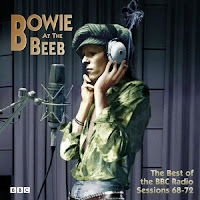
Bowie at the Beeb - 2000
Collection of live-in-studio tracks recorded exclusively for the BBC. While clearly aimed at collectors and completists, it’s interesting for the fact that the recordings are owned by none of Bowie’s previous record companies.
This means it’s the first compilation that includes early songs like In the Heat of the Morning, Karma Man, and a rocked-up version of Let Me Sleep Beside You alongside Spiders-era songs such as Queen Bitch, Moonage Daydream and Ziggy Stardust.
All Saints - 2001
What started out as a mix-tape for friends in 1993 was rearranged as a collection of instrumental works for commercial release in 2001.
It draws mainly from Low and “Heroes” but also includes selections from The Buddha of Suburbia and a piece from Phillip Glass’s Low Symphony. The most accessible tracks are at the front of the record with the rest becoming an ambient chillout mix.
While it’s a good idea to collect Bowie’s instrumental work, stripped of the context of their native albums, it risks becoming too much of a reasonably interesting thing. Good, but approach with caution.
Club Bowie - 2003
Collection of rare and (previously) unreleased club mixes. China Girl and the Club Bolly version of Let’s Dance are half decent. The rest are fairly generic if not unrecognisable. Inessential unless you’re the most passionate completist or a DJ (and are what you play).
The Collection - 2005
Curious budget collection that includes one non-single track from every Bowie album between 1969 and 1980 with the exception of Pinups.
Worthwhile for anyone looking to explore beyond the hits but unsure where to start.
1966 - 2015
Decca wasn’t the only company Bowie was briefly signed to in the 60s that continued to wring the association dry.
1966 is just the latest iteration of the half-dozen tracks recorded for Pye. They have been released multiple times under various titles, covers and labels. No one version is any better than the other.
See also: I Dig Everything - the Pye singles; Don’t Be Fooled by the Name; Early Bowie, et al.
Lazarus - 2016
It’s perhaps a bit of a ring-in to include this in a list of Bowie compilations, but it is a collection of some of his best loved songs, old and new, re-recorded and arranged with Bowie’s imprimatur.
This original cast recording of Bowie’s musical is given extra poignancy because it was made on 11 January, 2016 – the day after Bowie died.
Some of the arrangements are faithful to the originals while others, including The Man Who Sold the World, Changes, and Absolute Beginners are quite different. There are only brief moments when the performances become a little bit too Broadway.
A second disc contains Bowie’s own versions of the previously unreleased tracks featured in the musical.
Yes, I've already done the seven-day challenge and I've already cheated by choosing two for the last day, but when I first started this 'blog way back in 1899, the point of it was to do things my way. So here are three choices that almost made it and why:
Tin Machine
As with Never Let Me Down, I am not for one moment suggesting Tin Machine is a work of misunderstood genius. What's great about it is that it was such a breakout!
As mentioned and linked in the previous post, Bowie's plan in the mid-80s was to make as much money as he could and then retire to a tropical island somewhere. But he noticed it wasn't making him happy and Reeves Gabrels suggested to him that maybe he should do what makes him happy.
So yes, Tin Machine was rough and somewhat contrived, although probably no more or less contrived than any of Bowie's other adopted styles. It was as if all the raucous he'd been holding back for almost ten years came blurted out in two albums. These days you'd call it a reboot. And to push the analogy a little too far, rebooting can be messy.
Oh, and they rocked harder than a lot of the poodle metal acts around at the time.
I Know It's Gonna Happen Someday
It wasn't unusual for Bowie to do covers. In fact over half his albums have at least one cover version on them. Obviously being a Morrissey fan, this one is going to interest me but there's a cute circularity to the way this one came about.
Mick Ronson had produced Morrissey's Your Arsenal album, from which the song was taken, the year before. In one of the few insights into the creative process provided in Morrissey's Autobiography, it reveals that it was Ronson's idea to have the outtro of I Know It's Gonna Happen Someday follow the same chromatic run featured in the climax of Rock'n'Roll Suicide. Morrissey and his band were worried that Bowie would sue. Mick gave them a nod and a wink and assured them it wouldn't happen. The subtext? Ronson had written that part all along.
Bowie returned the compliment the following year saying, "It's me doing Morrissey doing me." None of this is to suggest that Bowie wasn't completely taking the piss on this version.
Ashes to Ashes
For the most part, I have tried to avoid obvious classics, but the one really is unavoidable. However, I am going to tell you something about it that you probably haven't heard before.
Bowie wasn't just a magpie in terms of musical styles; he would pinch lyrics and musical phrases from everywhere - not quite going as far as plagiarism but certainly going beyond a passing similarity.
One of the most obvious examples is in All the Madmen and the line, "Here I stand, foot in hand, talking to my wall," which can easily be sung to The Beatles' You've Got to Hide Your Love Away.
For Ashes to Ashes, Bowie dug back even further to another 'sequel' song by none other than Buddy Holly. Peggy Sue Got Married features the lines
You recall a girl that's been in nearly every song This is what I heard, of course the story could be wrong
Compare to the opening lines of Ashes to Ashes:
Do you remember a guy that's been In such an early song? I've heard a rumor from Ground Control Oh no, don't say it's true
Coincidence? Nup! And there's nothing wrong with that.
Another little bit I love about Ashes to Ashes is for a tragic song, there's still a bit of humour in there. The background voice in the second verse repeats every line including a deadly earnest, "Whoa ooh whoa hoo." It could be Bowie's most perfect song.
That really is all for now - apart from all the others.
Remember, you're not alone!
For most of the 80s, Bowie was more a craftsman than an artist. I'm not saying that's a good or a bad thing, just that that's how it was. He had quite
understandably decided it was time he had some seriously big hits. He did so with his own flair of course, but it's clear that commercial considerations were much more to the fore than the were in the 70s.
The reality is that when Never Let Me Down came out, Bowie was taking the money and getting ready to run. That was until Reeves Gabrels shook him and said, 'You're better than this!'
I'm not here to say Never Let Me Down is a work of misunderstood genius. It's not. It's some well-polished pop that is never going to stack up well beside Hunky Dory or Diamond Dogs. And as 80s pop went, it was a bloody sight better than Huey Lewis.
I've chosen these two songs (I couldn't separate them) because they're just... well, joyous! And we all need some joy. I listen to a lot of dark and cynical music but I balance it with some gorgeous pop. And the joy means more when it comes from someone who knows the dark side. Bowie had been through the terrible times and come out okay. Maybe we can too.
Bowie has dropped the mask a few times but the earliest and most moving were on the album that eventually became known as Space Oddity. There is the raw emotional honesty of Letter to Hermione too, but this was the one that I noticed the most.
I have to admit that having read about Bowie's determination for fame before hearing this album, I completely misinterpreted the title of this song at first. Although he was already creating otherworldly personae, the empathy shown for the poor, old and lonely is both surprising and reassuring. Beneath it all, he's a nice guy with concerns that go broader and deeper than the swinging London of the late 1960s.
Earthling is one of my favourite Bowie albums.
Although he'd been making music for 30 years by the time it came out, he was still exploring new and contemporary styles. Britpop? Meh, Bowie was there the first time around. The electronica of the mid-90s interested him more.
If it were anyone else, it might seem like a sad attempt to stay relevant but this was always Bowie's method to embrace a genre and bring his own style to it as well. See also, Young Americans - perhaps not authentic Philly Soul, but more than just a pale imitation. He wasn't just going to hire all the hip
producers of the day and say "make me sound like that" [coughMadonna].
Likewise, Earthing was not pure drum'n'bass, but Bowie did bring an element of songcraft to the style, so that even with two guitars, the songs still sound great.
Pre-fame Bowie is fascinating on many levels. His Deram label output is kind of similar to Dylan's earliest work in that we hear an artist still trying to work out who he wants to be. Dylan's first couple of albums are part folk troubadour, part next-generation Woody and part stand-up comedy.
And like Dylan, he never did decide on a particular direction, he just realised it was better not to put them all on the same album.
Bowie once said that if his early records had been successful, he would probably have ended up in West End musicals. In fact, I can see him playing a pretty good Phantom. It's not that big a step away from Jareth.
After Bowie did hit it big, these tracks were released on dozens of cheap and nasty collections. As skippable as many of the songs were, Bowie must have kept a soft spot for some of them. He attempted to rehabilitate some of the Deram era songs, including this one, on the shelved Toy album.
Another song about madness, 20 years after Aladdin Sane - not that there weren't plenty in between. Again, the narrator empathises with the subject - everyone thinks they know what's
best for him but all they really want is to be entertained, even if it's by the subject's suffering. In this sense, it's as much about fame as madness. Aladdin Fame?
The arrangement and mix is fairly contemporary to 1993, yet still manages to be individual with some amazing violining guitar from Reeves Gabrels. It also uses a device just before the fade which I've always been fond of - after reaching a climax, it pulls back to the basic arrangement.
This live version from 1995 also features some brief Mike Garson madness and also note the black and grey diagonal stripes again.
Whether Bowie was a true musical and compositional genius is debatable. I am currently half way through reading The Man Who Sold The World, which is a dissection of all Bowie's songs of the 1970s. In truth, it's a bit of an overly-serious slog but parts of it confirm my suspicion that in the early days at least, Bowie wrote his music as much by dictation to his musicians as by direct composition.
Be that as it may (or may not) where he truly excelled was at gathering the best musicians for the job, giving them just the right amount of direction, and then letting them do what they do. There are few better examples of this than Mike Garson's piano on Aladdin Sane.
The song is dark and disturbing enough already, but the two piano solos probably give a better description of mental instability than the words ever could.
Instead, the words focus on the humanity of madness. For all his demons, Aladdin is human and he needs to be loved, just like everybody else does. Although the lyrics are written in a mix of the third and second person, it's never made clear whether the song is about a character or whether the actor is referring to himself in the third person.
As the band fades out, the piano is left getting even darker, using both extremes of the keyboard before hanging on a dissonant chord, and finally an almost comical flourish to tell you things are going to be okay. That wasn't Bowie's doing per se, but he knew enough to give Garson his head and let him do exactly what the song needed.
Bowie's musicians appreciated the trust and space they were given and responded accordingly. Here is an amazing live version Mike Garson posted not long ago:
This is one of those facebook "challenges" that goes around. I was invited by a friend to participate and thought that it sounded like an interesting idea. I'm not linking to my facebook here but for the next seven days (or maybe eight) at around this time(ish) I will be posting some of my favourite Bowie songs and why.
Absolute Beginners:
For Day 1, I'm going to start roughly where I started with Bowie,
in the mid-80s. There are even hardcore Bowie fans who will tell you
that pretty much everything he did between Scary Monsters and Heathen was crap. Bal. Der. Dash!
I was well aware of Bowie by 1986, having heard Let's Dance, Under
Pressure, Blue Jean, Changes and the like, but Absolute Beginners really
hit me in the face.
I was 14 when it came out so the lyrical
themes resonated with a romantic teenager, and the change from Bm to
Amaj7 between the 2nd and 3rd lines of the verse was just sublime. It's
hard to describe what an amazing sound this was in the age of synth-pop
and hair metal.
Another great thing about the song is that it
was written to order for a movie and yet stands on its own outside the
context of the film. Few film songs can do that.
It was clearly a
favourite of Bowie's too. This is a beautiful version with the
brilliant Gail Ann Dorsey providing the harmonies. The warmth between
them is so touching.